


Why Every Buyer Should Understand Phase I Environmental Site Assessments if you’re thinking about buying commercial property in Florida whether it is a gas station, strip mall, or vacant parcel
Updated: Jul 26
Breaking it down into simple terms and their implication to your project!
What Is a Phase I ESA?
A Phase I ESA is an environmental “background check” on a property. It focuses on research, records, and visual inspection to determine whether past activities on the site may have caused contamination. A Phase I ESA includes:
A site visit
Review of historical aerials, maps, and records
Interviews with owners, tenants, and local agencies
Review of environmental databases
Identification of Recognized Environmental Conditions (RECs) — red flags that may indicate contamination
Think of it as due diligence that helps you avoid inheriting someone else’s environmental mess. It is important to understand that a Phase I ESA does not include environmental testing of soil, groundwater, or vapor - those items are considered part of a Phase II or III ESA.
Three simple reasons why Phase I ESAs are important:
1. Protect Your Investment
Environmental cleanup can be expensive — sometimes hundreds of thousands of dollars. A Phase I ESA helps you understand whether contamination is likely before you buy the property, so you can negotiate, walk away, or plan accordingly.
2. Satisfy Lenders and Insurers
Most banks will not finance commercial property without a Phase I ESA. It’s a standard requirement because lenders want to avoid financing a property with hidden environmental liabilities.
3. Avoid Inheriting Cleanup Liability
Under federal law (CERCLA), property owners can be held responsible for contamination even if they didn’t cause it. A Phase I ESA is your first line of defense against that risk.
What Protections a Phase I ESA Provides
When completed according to ASTM E1527‑21 and CERCLA’s All Appropriate Inquiries (AAI) rule, a Phase I ESA can provide powerful legal protections:
1. CERCLA Liability Protection
If contamination is later discovered, a properly completed Phase I ESA helps you qualify as:
Bona Fide Prospective Purchaser (BFPP)
Innocent Landowner
Contiguous Property Owner
These statuses can protect you from being held responsible for cleanup costs you didn’t cause.
2. Eligibility for Brownfield Incentives
If the property is in a Florida Brownfield Area — or becomes a designated Brownfield site — your Phase I ESA supports:
Access to tax credits
Job bonus incentives
Liability protections
Redevelopment support
It’s the foundation of Florida’s redevelopment programs.
3. Stronger Negotiating Power
If the Phase I ESA identifies RECs, buyers can:
Request seller cleanup
Adjust the purchase price
Require escrow funds
Plan redevelopment with awareness of environmental conditions
Knowledge is leverage.
Case Study - Phase I ESA Former Gas Station
A prospective buyer wanted to purchase an auto repair facility as part of a larger tract of land to be redeveloped as a luxury apartment complex in South Florida.
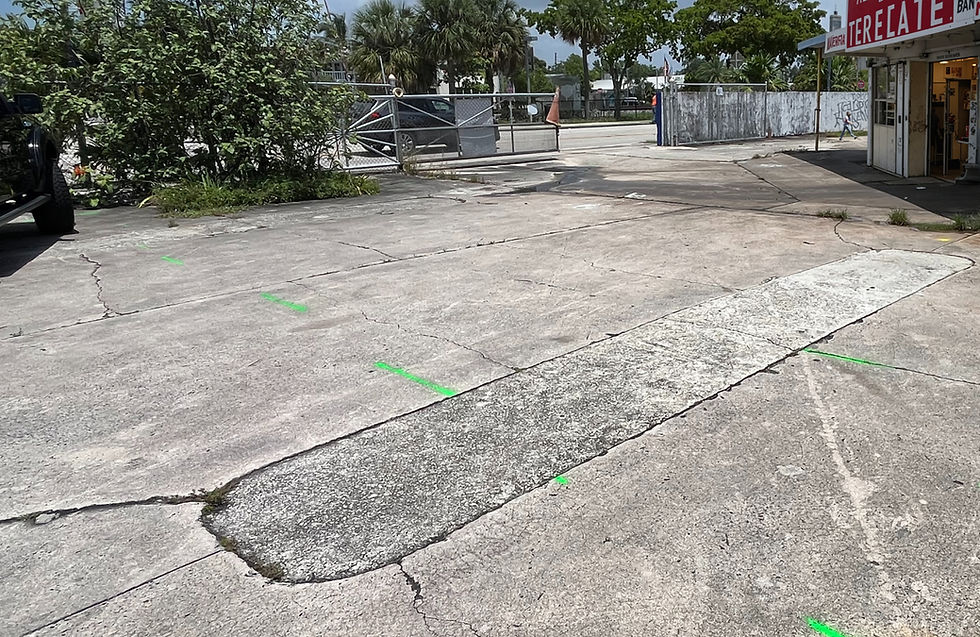
During the site visit, our team observed:
A metal cap (fill port) labeled ‘Amoco’ covering the access to the port the gas tank would be filled with fuel
Saw cuts in the concrete where a former dispenser island was located
Based on these findings, we identified RECs and recommended a Phase II ESA to evaluate potential petroleum impacts. The results of the geophysical survey identified three underground storage tanks (USTs) were present. Petroleum constituents from soil and groundwater samples collected near the USTs were not above the laboratory detection limit.
Outcome: The buyer used the Phase I and II ESA findings to negotiate a reduced purchase price to cover the cost of removing the USTs. The USTs were removed and the buyer was able to proceed with redevelopment.
If you're thinking about purchasing a commercial or industrial property, contact Trailblazer Environmental Consultants, LLC to get a Phase I ESA so you can make an informed decision before you buy!


Comments